The smallholding
Three to five hectares, several small cycles and a family income: what a permaculture smallholding can realistically do.
Three to five hectares is enough. That is the area a family in Denmark needs in order to live on a normal income and still be self-sufficient, provided that everything on the holding is productive and the biological cycle functions completely. A smallholding is not a farm in miniature with the same layout; it is several small cycles fitted together.
Three to five hectares, and everything must produce
A holding of three to five hectares is large enough for a normal-sized family in Denmark, but on one condition: everything must be productive, and the biological cycle has to work 100 per cent. There is no room for land that only looks good. The area can also be two hectares or more, but it is the use of the area, not its size, that decides whether you have a garden or a smallholding.
Many small units, one cycle
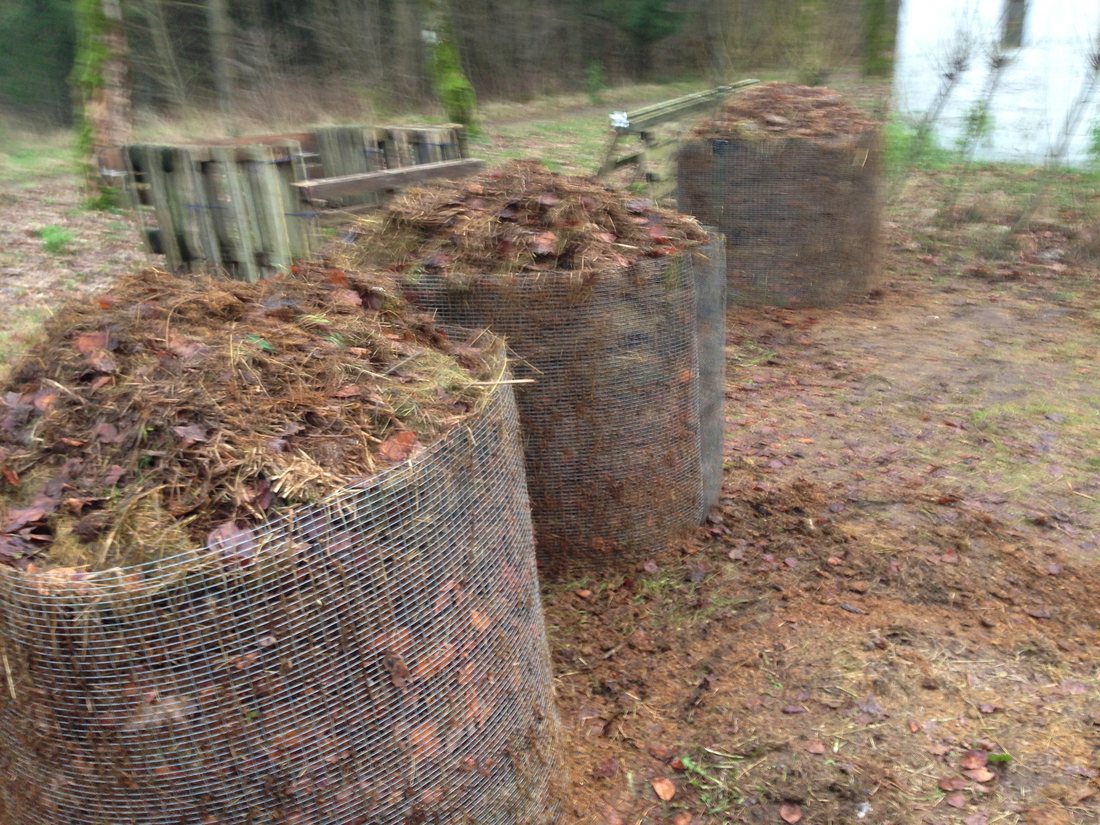
There will often be several smaller biological cycles, each a unit with its own animals and plants as elements. The work is to assemble them into one large symbiotic cycle that covers the whole holding. That means producing as many different foods as possible — many small streams — and selecting more production lines, each a small project with biological elements and each part of the total cycle. Soil, water, animals and plants must fit together in every unit and support each other. They should be seen as living elements of the holding, not as inputs. There must be places where internal products such as manure and plant material are processed and then wait for application. Everything is part of the production and feeds back into the cycle.
A staged start-up
A permaculture smallholding is always started in several stages over a longer period. The design plan is therefore made together with a flow plan and an implementation plan. It matters to know what is possible on a smallholding, and how it can be done. Every element must be placed where the landscape and the nature of the site suggest, and in relation to the other units in the total cycle.
Water in a closed circuit
Make lakes wherever it is natural to make them. The lakes are connected to one another by horizontal channels, and overflow runs from one lake to the next, so that water moves in a closed circuit. The lakes and channels store and transport energy and nutrients. They are a very important part of the holding's biological cycle, which is the basis of the whole smallholding.
Layered like a forest
Use as many perennial plants as possible: trees, shrubs, herbs and vegetables, grown in seven to nine layers as in a natural forest. Animals should be part of the holding too, with direct or indirect access to the ground at the times when it gives the most benefit.
Production rises for twenty to thirty years
Underneath everything is soil fertility, rebuilt through the soil food web. It can only be done by making a food-productive copy of what nature would do if the land were left untouched. It takes time, though less time than it did a few years ago: with current biological knowledge, techniques and technologies, some units are established and in operation in two to three years. The holding as a whole can work as a biological cycle in four to five years. Many of the plant elements will then keep rising in production for the next twenty to thirty years.
Animals, the law and stocking density
Under Danish law you may keep a certain number of livestock per hectare, and all animals count. Five hectares with five dairy cows and a few calves leaves little room for goats, pigs or sheep. Similar rules exist in many countries, so it is worth deciding the ultimate goal before buying animals.
The law is not the only reason for diversity. The biological cycle has to be in balance between soil, plants and animals, and that balance is easier with several species. If you keep cows, it is a good idea to keep chickens as well, and perhaps sheep and goats, because together they look after grazing areas better. In nature there are always many different animals, often in symbiotic relationships, preferring different grasses, herbs and shrubs. That keeps all the plants growing well and produces a greater total biomass.
Orchards, pigs and poultry
An orchard is a good example of how the units fit together. Fruit trees need bees, the right animals and other plants that attract beneficial insects, and other useful, food-producing plants can be grown between the trees. The orchard then becomes the basis for several elements that improve both the production and the quality of the fruit while paying a dividend of their own. Pigs, chickens, sheep and goats can all be useful and productive elements in an orchard under the right circumstances.
Never a monoculture
A permaculture unit is never a monoculture. It is always a polyculture, with many different plants and animals working together in the biological cycle.
Where to start
A smallholding may be the most versatile and productive form of food production there is, but only if the biological cycle of plants, animals, water and soil sits at the centre of every decision. If you want to know what your own holding can carry, book a consultation.
Continue reading
All guides
The permaculture garden
Make zones and water : how a garden becomes a working biological cycle that keeps producing for decades.
Read the guide
Permaculture farming
How a farm becomes a complete biological unit — soil, plants, animals + vater and the economics of working with nature.
Read the guide
What is permaculture?
A working definition of permaculture: a food-productive copy of nature's biological cycle, built from soil, plants and animals.
Read the guide