The three ethics
Care for the earth, care for people, fair share — the three ethical principles that sit underneath every permaculture decision.
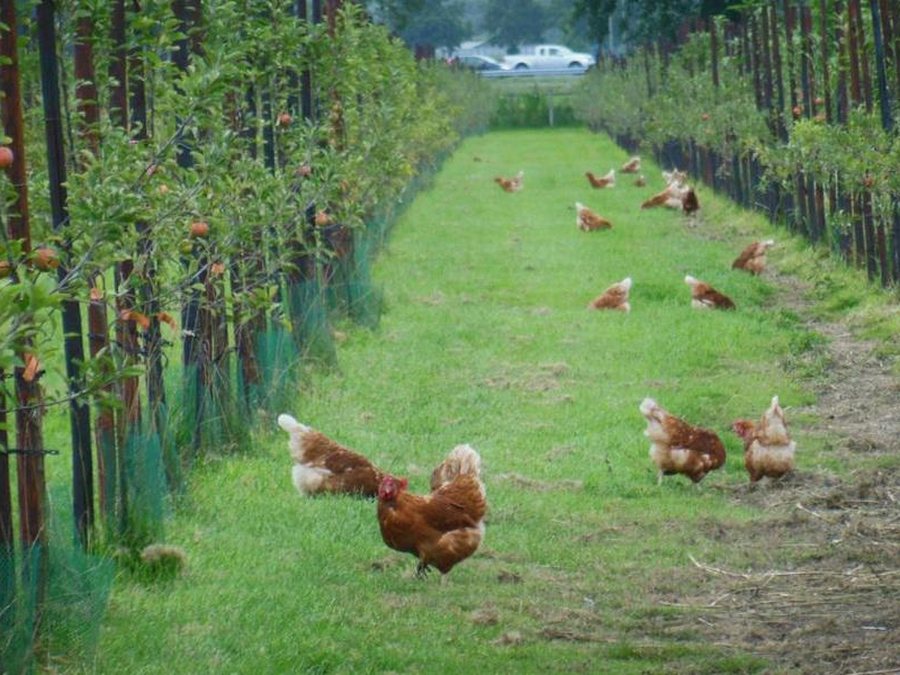
Permaculture rests on three ethics: care for the earth, care for people and fair share. They are not decoration. They are the test a design has to pass before anything is planted, built or bought, and a project that fails one of them usually fails the other two within a few seasons.
Care for the earth
Care for the earth means farming land, forest and water as one system rather than three resources.
Start with a comparison that is easy to forget. A piece of original nature is around ten times more productive than so-called conventional agriculture, and it does that with no input at all. Conventional farming with GMO seed, chemicals, oil and machinery is outperformed ten to one by nature.
Many conventional methods carry such a high energy input that the energy in the crops is often less than the energy put in. That is not care for the earth. Conventional farming at that point offers only destruction, because it is about profit here and now.
A permaculture project is best seen as one living organism, nature's own recycling system, where every element depends on every other element, back and forth. Nutrition and energy are recycled and reused again and again, as they are in a natural habitat.
All of it rests on soil fertility. A deep living soil has to be formed, and it is the most important part of any project. Crops do not grow on square metres of land; they grow in cubic metres of soil.
The system then builds in succession. Multipurpose trees and shrubs for lumber, chop and drop, coppice, flowers, fruit, nuts and berries, with as many nitrogen-fixing trees and shrubs as possible, especially early on, plus cover crops, companion planting and productive annuals that fix nitrogen and improve soil. Hugelbeds follow the contour lines, with horizontal water channels that gather water and release it slowly to the lowest point, a lake or pond, which feeds irrigation back into the system.
Compost is the first unit to build and run, because compost is part of every other unit. Cold composting, thermal composting and vermiculture do most of the work, and they are what make compost tea and extract possible.
Care for people
Care for people starts close to home: yourself, your relatives and the society you sell into.
The self-sufficient household is almost unknown in many parts of the world, yet many people have more than 400 to 500 m² around their house laid out for decoration alone. As a permaculture garden, that area can grow most of a family's vegetables and fruit.
Projects often keep an open door, so that anyone interested can come in to see and taste. Visitors see what they could produce themselves, and the project gains social activity with children and neighbours.
Renewable energy belongs here too. Solar power, solar heating and wind have evolved greatly in some parts of the world over the last ten years, and all of them can be part of a permaculture project.
Demonstration projects may be the most important expression of this ethic: letting people look and taste shows what is possible. Training farmers and agricultural students matters just as much.
Western farmers run large farms, with 2,000 sows and 1,000 hectares or more, and the farmers cannot live from them. They run at a loss and need financial support, because they are inefficient mono productions that demand very large inputs. A family can live from 5 to 10 hectares with permaculture farming, and if farmers knew that, it would change how agriculture thinks.
Fair share
Fair share is about putting limits on consumption and reproduction, and about sharing the surplus.
Some products grow in larger quantities than are needed in some periods, and can be given away to visitors or to institutions. Fruit is the obvious one. Good taste is an advertisement for permaculture products: give the excess out and get more customers next year.
Perhaps fair share is simply making room for everyone and giving everyone a chance to do their best. In permaculture it also means giving back to nature in as many ways as possible, because we live from nature.
Soil and fresh water are the most important resources in the world, and both are being used up at an alarming rate, especially because conventional agriculture pollutes and destroys them.
Conventional farming uses 70% of all arable land, 80% of fossil fuels and 70% of the water, and pollutes all the air, soil and water that approaches the farms. With all that destructive input it produces only 30% of the food for humanity, much of it unhealthy or downright dangerous. Small farmers with a few hectares produce 70% of human food on 30% of the land, with 20% of fossil fuels and 30% of the water, and much of that food is healthy because it has never been sprayed, given fertiliser or industrially treated. It is often sold fresh and alive from the farm or the local market.
Family permaculture farming follows. Large conventional farms that cannot pay their way should be closed and divided into regenerative family farms of 5 to 10 hectares, and a thousand hectares can hold 100 or even 200 of them. Those families have varied work, good income and excellent food to sell; employees receive a fair share, and permaculture students get a real education.
Fair share asks what your surplus is for, and who else needs it. If you want to work that through on your own land, book a consultation and we will look at the place with you.
Continue reading
All guides
What is permaculture?
A working definition of permaculture: a food-productive copy of nature's biological cycle, built from soil, plants and animals.
Read the guide
What is regenerative agriculture?
Degenerative, generative and regenerative farming — and why a permanent plant cover changes everything.
Read the guide
The 12 principles
The twelve design principles permaculture works by, explained in plain language with examples from real farms and gardens.
Read the guide